New to cooking elk? Whether you've just filled your freezer after hunting season or you're trying elk for the first time, here are my favorite tips for preparing tender, flavorful elk without drying it out.
Category: Montana Living | Wild Game Recipes | Cooking Tips
Growing up in Montana, hunting has always been about more than filling a tag. It's about spending time outdoors, traditions passed down through generations, knowing where your food comes from, and appreciating the animal that provides it.
As a fifth-generation Montanan, I have a deep appreciation for our hunting traditions. And while I love everything that comes with hunting season, one of my favorite parts is getting creative in the kitchen afterward!
Elk is easily one of my favorite meats to cook with. It's lean, packed with protein, incredibly versatile, and, when prepared correctly, absolutely delicious.
But if you've ever cooked an elk steak that turned out tough or dry, you're not alone. Elk is quite different from the beef you buy at the grocery store, and understanding those differences can completely change the way you cook it.
Here are a few things I've learned about cooking elk and making the most of the meat in your freezer.
1. Elk Is Not Beef, So Stop Cooking It Like Beef!
One of the biggest mistakes people make when cooking elk is treating it exactly like beef.
Elk is naturally much leaner than most commercially raised beef. While that makes it a great source of protein, it also means there's less fat to keep the meat moist during cooking.
And because elk is so lean, it's much easier to overcook.
A few things to remember:
Elk cooks differently depending on the cut, thickness, and cooking method.
Lean elk steaks can dry out quickly when exposed to high heat for too long.
Ground elk often benefits from additional fat or moisture.
Tougher cuts, like shoulder and neck roasts, are excellent for slow cooking.
The good news? Once you understand how elk responds to heat, it's incredibly easy to incorporate into everyday meals.
2. Invest in a Good Meat Thermometer
If I could give you one piece of advice about cooking elk, it would be to buy a meat thermometer!
I cannot tell you how many times I've heard someone say they don't like elk because it's too tough or dry.
Chances are, they've had overcooked elk at some point.
Unlike a well-marbled ribeye, elk doesn't have much internal fat to protect it from drying out.
Elk cooking temperatures:
For food safety, the USDA recommends cooking whole cuts of elk and other wild game to an internal temperature of 160°F. Ground elk should also reach 160°F.
You'll often see recipes recommending medium-rare elk steaks, but those lower temperatures do not meet the USDA's conservative safety guidance for wild game.
Regardless of how you prepare your elk, a meat thermometer is the best way to avoid guessing when it's finished cooking.
And remember, a thick elk roast and a thin backstrap steak require completely different cooking methods!
3. Add Fat When Cooking Ground Elk
This is one of my favorite cooking tricks.
Elk is extremely lean, which means ground elk doesn't always behave the same way as ground beef.
Depending on the recipe, adding a little fat can make a huge difference in flavor and texture.
My favorite additions include:
Pork fat: Great for elk burgers, meatballs, and homemade sausage. I generally recommend 10–20% added pork fat, depending on the recipe.
Butter: Perfect for browning elk and making rich gravies.
Olive oil: My go-to when cooking ground elk for soups, tacos, and casseroles.
Bacon: Adds delicious smoky flavor to elk burgers and meatloaf.
If you're having your elk processed, ask whether fat is already being added to the ground meat. You don't want to add unnecessary fat if it's already mixed in!
I use ground elk in almost every recipe that traditionally calls for hamburger. From lasagna to chili, it's one of the most versatile ingredients in my freezer.
4. Know Your Elk Cuts
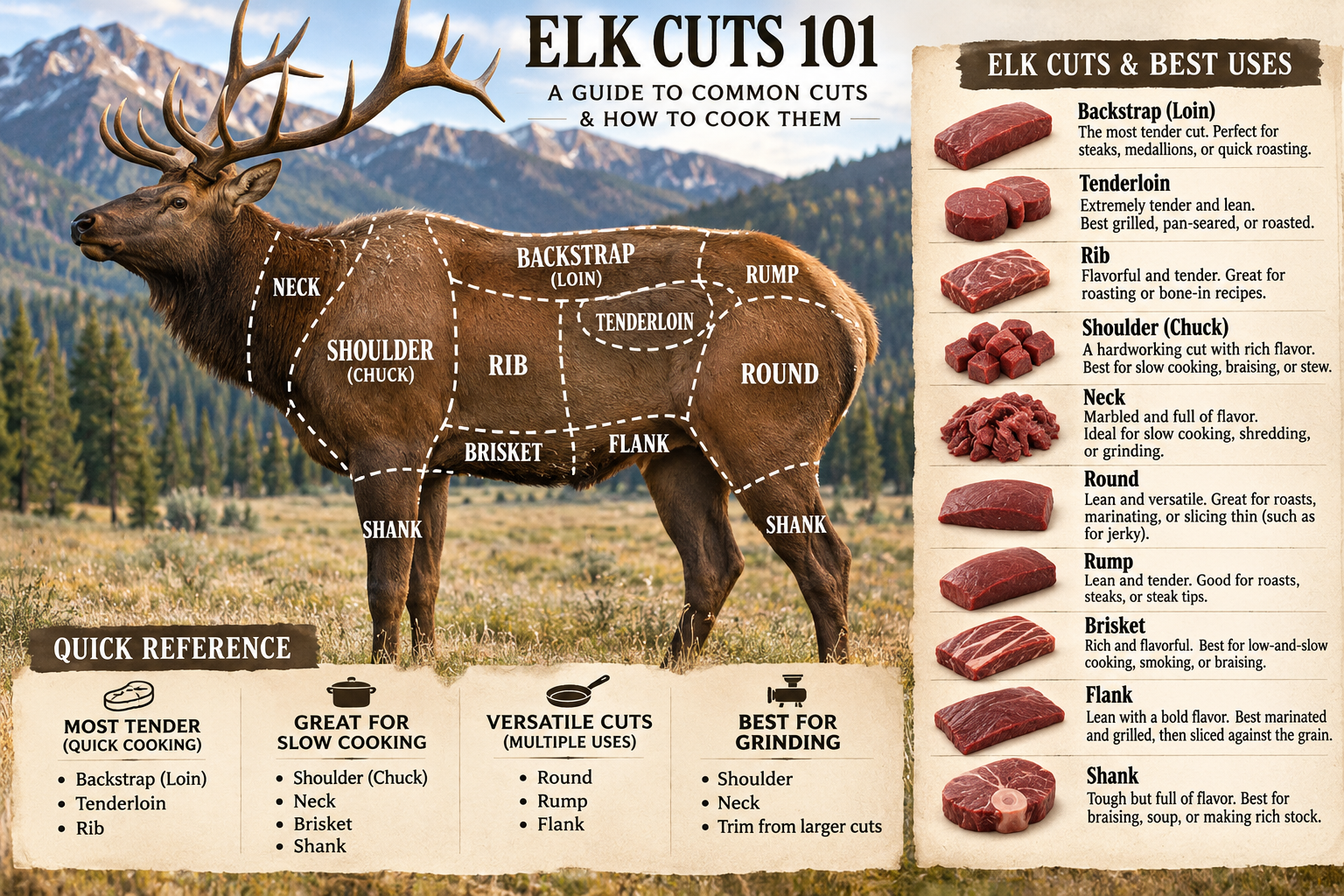
Not all elk cuts should be cooked the same way!
Understanding which cuts are naturally tender and which benefit from slow cooking will make a huge difference in your meals.
Backstrap
One of the most prized cuts of elk!
Backstrap is naturally tender and works beautifully as steaks or larger portions for roasting.
I prefer simple seasonings like salt, black pepper, garlic, rosemary, and butter. Elk already has a wonderful flavor, so there's no reason to overcomplicate it.
Tenderloin
Tenderloin is another incredibly tender cut, and it's usually smaller than the backstrap.
Because it's so lean and delicate, it requires careful attention during cooking.
A simple preparation with butter, garlic, and fresh herbs is hard to beat.
Shoulder and Neck Roasts
These cuts come from muscles that do a lot of work, which means they contain more connective tissue.
Don't overlook them!
Slow cooking with broth, onions, garlic, and herbs allows that connective tissue to break down and creates incredibly tender meat.
I love using these cuts for shredded elk tacos, pot roast, stew, and hearty soups.
Ground Elk
If you're just starting to cook with elk, this is where I recommend beginning.
Ground elk is easy to substitute for ground beef and works in practically everything.
Think tacos, burgers, casseroles, chili, meatballs, lasagna, and homemade sausage.
5. Does Elk Taste Gamey?
Let's talk about everyone's favorite word when describing wild game: gamey. haha I mean… IT IS A LITTLEEE.
Personally, I think elk is one of the more more mild and most approachable wild-game meats. (WAY better than venison, in my preference!)
It has a rich, slightly earthy flavor, but it shouldn't have an unpleasant or overpowering taste.
Several factors can influence how elk tastes, including the animal's age, diet, field handling, processing, and storage.
Here's what I recommend:
Cool harvested meat promptly and keep it clean during processing.
Trim away damaged tissue, silver skin, and unwanted fat when preparing cuts.
Package meat properly to prevent freezer burn.
Thaw frozen elk in the refrigerator rather than on the countertop.
Use fresh herbs, garlic, onions, and simple seasonings that complement the meat rather than cover up its natural flavor.
If you find it “gamey” just soak every piece of elk in a strong marinade and add lots of seasoning!
6. My Favorite Ways to Cook Ground Elk
Here are a few recipes I love making:
Montana Elk Shepherd's Pie
Technically, shepherd's pie is made with lamb, and a version made with elk would be considered cottage pie. But that's the fun part about creating your own recipes. You can call them whatever you want!
French Onion Elk Meatballs with Homemade Gnocchi
Tender elk meatballs smothered in a rich French onion gravy, topped with melted Gruyère cheese, and served over homemade potato gnocchi.
Montana Elk Italian Wedding Soup
Homemade elk meatballs, fresh vegetables, pearl couscous, spinach, and Parmesan cheese in a flavorful broth.
Elk Cattle Drive Casserole
Seasoned ground elk layered with a cheddar biscuit crust and a creamy, cheesy topping. A perfect weeknight comfort-food dinner!
Montana Elk Rotel Queso Dip
A creamy, cheesy appetizer made with ground elk, tomatoes, peppers, and plenty of flavor. Perfect for football season or entertaining friends.
The possibilities really are endless.
7. How to Store Elk Meat Properly
One of the best parts about hunting is having a freezer stocked with meat for the year.
But proper storage makes a huge difference in preserving quality.
A few freezer tips:
Vacuum seal elk whenever possible to reduce exposure to air.
Label packages with the cut and processing date.
Keep your freezer at 0°F or colder.
Use older packages first to maintain the best quality.
Thaw meat safely in the refrigerator.
For the best quality, I try to use ground elk within 3–4 months and well-packaged steaks and roasts within 4–12 months, depending on the packaging. Properly frozen meat can remain safe longer, but quality gradually declines.
I also like keeping a variety of cuts in the freezer rather than grinding everything.
Having steaks, roasts, stew meat, and ground elk gives you so many more options throughout the year.
Final Thoughts
If you're new to cooking elk, my biggest advice is to start simple.
Try substituting ground elk into a recipe you already love. Experiment with different cuts, learn how to properly cook lean meat, and don't be afraid to get creative in the kitchen.
Elk is one of the most versatile and delicious meats you can cook, and it's something I feel incredibly fortunate to have in my freezer.
For me, cooking elk is about more than making dinner. It's about appreciating where our food comes from, respecting the animal, and continuing traditions that have been part of Montana families for generations.
And if I can convince a few more people that wild game can be just as delicious as anything you'd order at a restaurant, even better!
Happy cooking!
— Madison in Montana
